Post-construction cleaning happens in three phases, rough clean, final clean, and touch-up, and each phase has its own checklist, timing, and crew. A deep clean removes dirt. A post-construction clean removes what building leaves behind: drywall dust, joint-compound haze, adhesive, paint overspray, and protective film. Ahlers Building Maintenance LLC has cleaned new and renovated commercial spaces across the Kansas City metro since April 2000, and this is the checklist our crews work from on every post-construction cleaning project.
Use it to scope a bid, write the final clean into a general contractor agreement, or plan the last week before occupancy. For the service overview, see our guide to post-construction cleaning in Kansas City.
Key Takeaways
- Rough clean happens after drywall and paint. Final clean happens after all trades finish. Touch-up happens after punch-list work and furniture install.
- The final clean is the phase that matters for occupancy: HEPA vacuuming and wet-wiping of every surface, glass, fixtures, and floors.
- OSHA’s construction silica rule restricts dry sweeping where it could contribute to exposure. Use wet methods or HEPA-filtered vacuums.
- Plan the final clean two to five working days before move-in for most suites. Multi-floor projects need a week or more.
- Put the phase, scope, and responsibility in writing. “Broom clean” in a general contractor agreement is a rough clean, not a final clean.
Table of Contents
- 1. Post-Construction Cleaning Is Not a Deep Clean
- 2. The Three Phases at a Glance
- 3. Phase 1: Rough Clean Checklist
- 4. Phase 2: Final Clean Checklist
- 5. Phase 3: Touch-Up Clean Checklist
- 6. Timing: How to Sequence Cleaning Before Occupancy
- 7. Who Pays: GC Contract vs. Owner-Hired Final Clean
- 8. What Drives Post-Construction Cleaning Cost
- 9. Frequently Asked Questions
- 10. Schedule Your Post-Construction Clean
1. Post-Construction Cleaning Is Not a Deep Clean
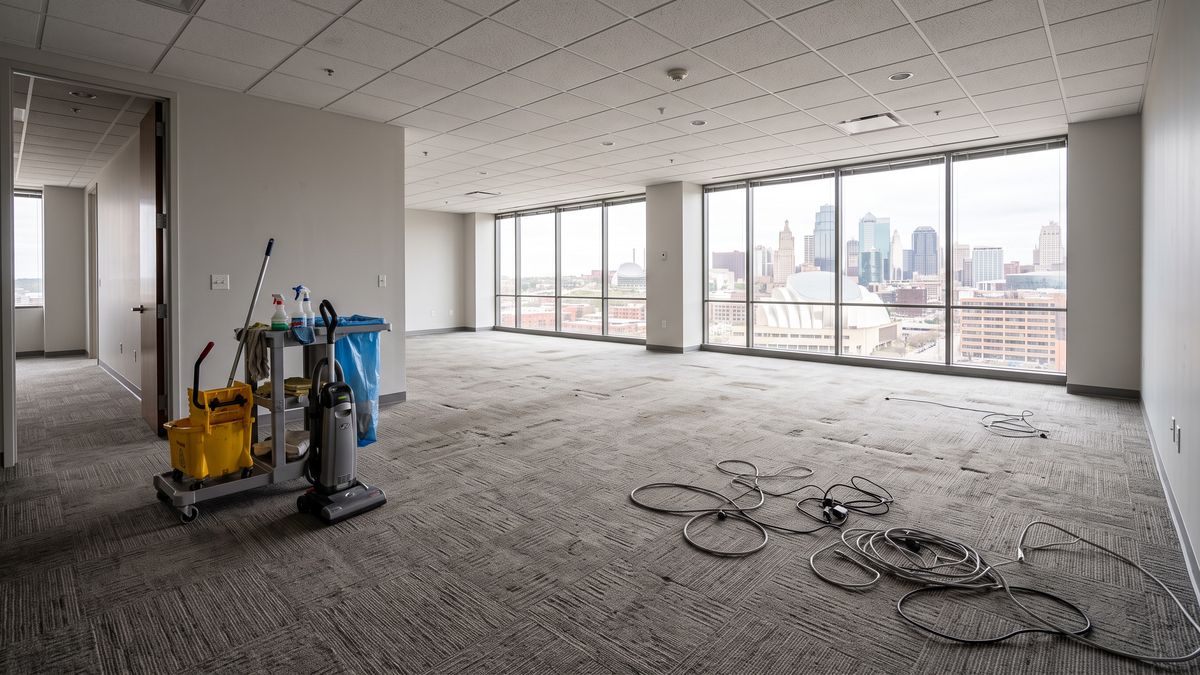
Post-construction cleaning is the removal of construction residue from a new or renovated space so it can be inspected, furnished, and occupied. Drywall dust settles on every horizontal surface and inside every cabinet, joint-compound haze clings to glass, adhesive and overspray sit on frames and fixtures, and protective film covers floors and appliances. None of that responds to a routine janitorial visit.
The difference is equipment and sequence. Standard vacuums clog and exhaust fine dust back into the room, so crews use HEPA-filtered vacuums. Residue needs razor work, solvents, and microfiber, not a spray-and-wipe. And the work is ordered top-down and phase-by-phase, because dust that is knocked loose from a ceiling grid after the floors are done means doing the floors twice.
2. The Three Phases at a Glance
Rough clean clears bulk debris so trades can finish, final clean makes the space move-in ready, and touch-up removes what installers and movers leave behind. The table shows when each phase happens, what it includes, and who usually orders it.
| Phase | When it happens | Purpose | Typical scope | Who usually orders it |
|---|---|---|---|---|
| 1. Rough clean | After framing, drywall, and paint; before flooring, cabinetry, and fixtures | Remove bulk debris and the first layer of dust | Debris haul, HEPA vacuum and wet sweep, remove packaging and stickers, wipe ledges and sills | General contractor |
| 2. Final clean | After all trades sign off; before final inspection and turnover | Make the space inspection-ready and move-in ready | Top-down wet wipe of every surface, HEPA vacuum, glass and frames, fixtures, restrooms, kitchens, floors by type | General contractor or owner/tenant |
| 3. Touch-up clean | After punch-list work and furniture and IT install; one to two days before occupancy | Remove installer fingerprints, packaging, and fresh dust | Spot-clean glass, surfaces, floors, restrooms; final trash-out | Owner or tenant |
3. Phase 1: Rough Clean Checklist
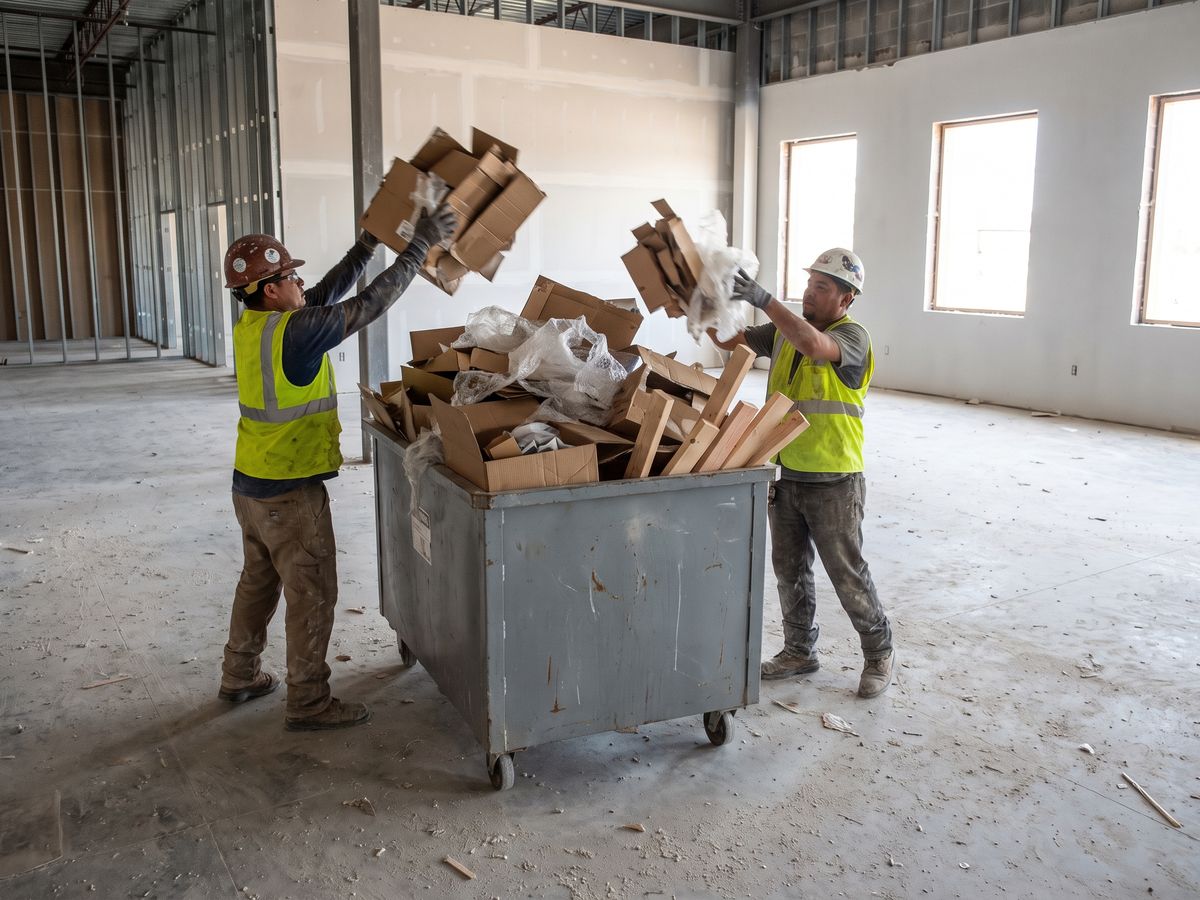
The rough clean removes bulk debris and the first layer of dust after drywall and paint, before flooring, cabinetry, and fixtures go in. It is not detail work. Its job is to give the finish trades a clean site and to keep dust from getting sealed under new floors and behind new millwork.
- Haul cardboard, plastic sheeting, lumber offcuts, drywall scraps, and packaging to the dumpster or recycling
- Remove manufacturer stickers, labels, and protective wrap from installed doors, frames, and windows where the GC approves
- HEPA vacuum or wet-sweep the subfloor; no dry sweeping of drywall or concrete dust
- Wipe window sills, ledges, door frames, and the tops of wall cabinets
- Scrape drywall mud, paint drips, and adhesive from subfloors and thresholds
- Vacuum out electrical boxes, HVAC diffuser openings, and light fixture housings before trim goes on
- Clean the temporary restroom and break area the trades use
4. Phase 2: Final Clean Checklist
The final clean makes the space inspection-ready and move-in ready, and it is the phase that matters. Every surface gets HEPA vacuumed and wet-wiped from the ceiling down, glass and frames get razor and solvent work, fixtures get de-labeled and polished, and floors get finished by type. Plan it after the last trade signs off and before the occupancy walk.
- Ceilings and above: vacuum ceiling grid and tiles, wipe light lenses and fixtures, clean HVAC diffusers and return grilles, dust sprinkler heads and exposed ductwork
- Walls, doors, and hardware: wet-wipe painted walls, remove overspray and mud from door frames, clean switch plates, outlets, thermostats, and hardware, remove all stickers and film
- Windows and glass: razor adhesive and mortar haze, remove protective film and labels, clean glass inside and out, wipe mullions, frames, and tracks
- Millwork and cabinets: vacuum and wipe inside every cabinet and drawer, clean exteriors and hardware, remove shipping blocks and packing
- Restrooms: remove labels and film from fixtures, mirrors, partitions, and dispensers; descale and polish; disinfect toilets, urinals, and sinks; machine-scrub tile and grout; check drains for construction debris
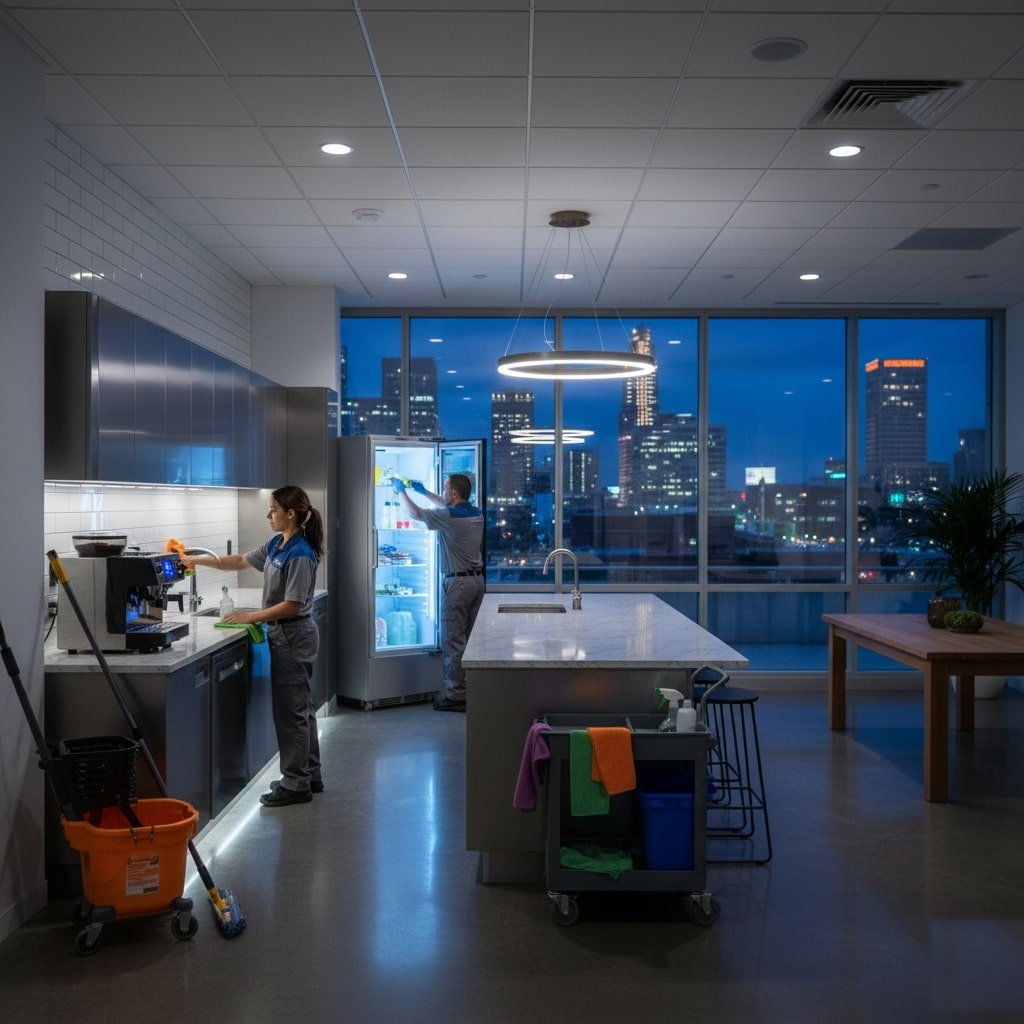
- Kitchens and break rooms: clean inside and behind appliances, degrease surfaces, polish stainless, scrub floors
- Floors by type: VCT gets stripped of construction finish, scrubbed, and finished with new coats (see our floor care guide); carpet gets HEPA vacuumed then extracted; polished concrete gets scrubbed and burnished; tile gets grout-scrubbed after haze removal; LVP and wood get protective film removed and neutral-cleaned
- Exterior: entry glass and thresholds, dock and loading areas, walk-off mats installed
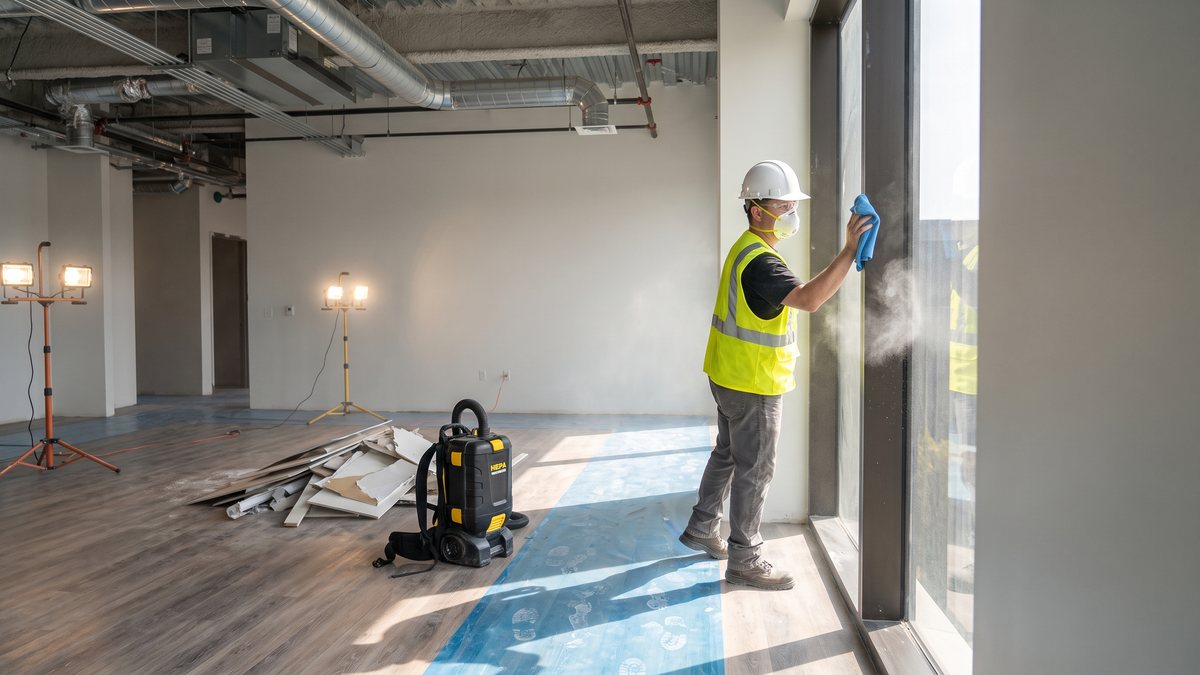
Dust control is a safety requirement, not a preference. Under OSHA’s respirable crystalline silica standard for construction (29 CFR 1926.1153), employers must not allow dry sweeping or dry brushing where it could contribute to silica exposure unless wet sweeping, HEPA-filtered vacuuming, or other methods that minimize exposure are not feasible, and compressed air cannot be used to clean surfaces unless it is paired with a ventilation system that captures the dust (OSHA 1926.1153). Concrete, mortar, tile, and drywall joint compound can all contain silica, so our crews use HEPA vacuums and wet methods on every final clean. We also default to green cleaning products so the space does not smell like solvent on move-in day.
5. Phase 3: Touch-Up Clean Checklist
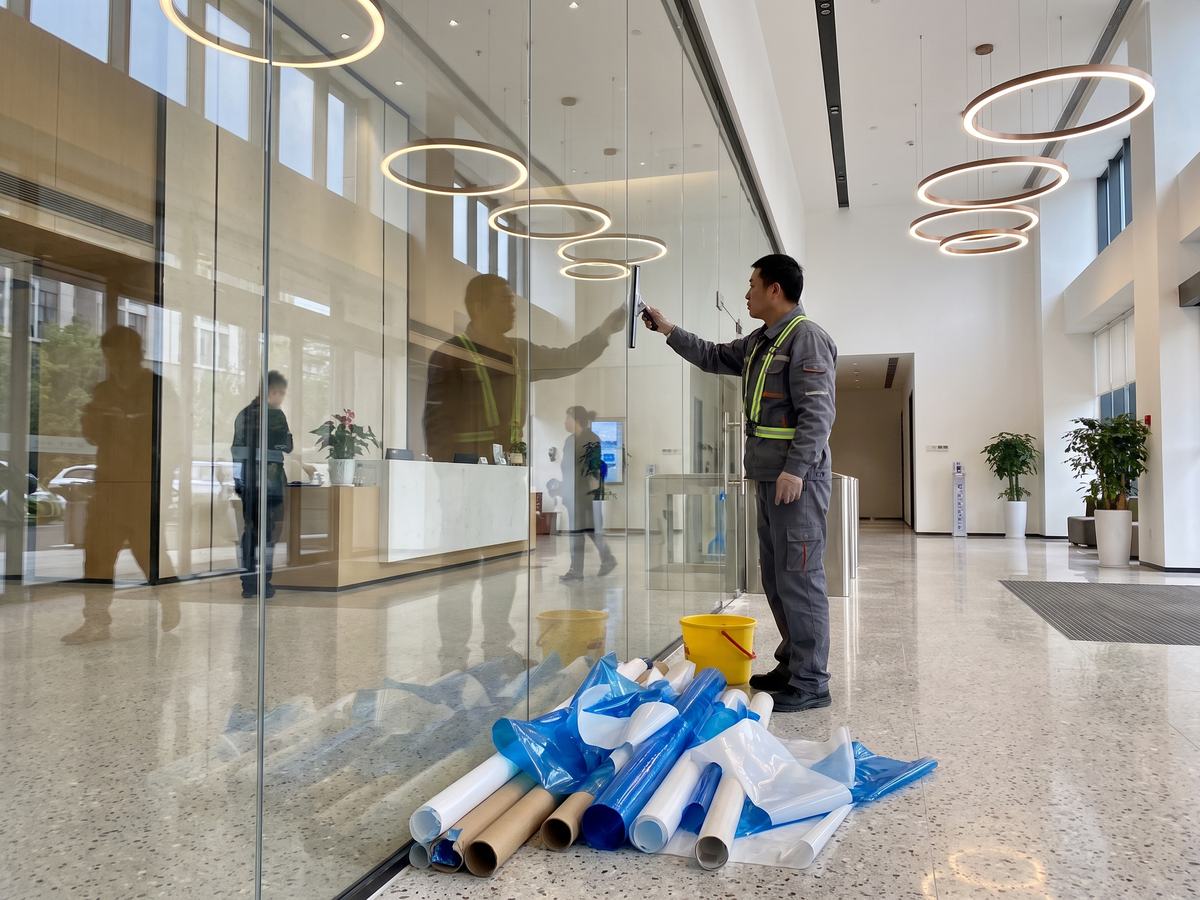
The touch-up clean removes what happens between the final clean and move-in: punch-list repairs, furniture delivery, IT and AV installation, and signage. It is a short, targeted pass one to two days before occupancy, and it is the difference between a space that was cleaned and a space that looks clean when staff walk in.
- Remove furniture packaging, pallet wrap, and cable-tie clippings; final trash-out
- Spot-clean glass partitions, doors, and monitors for installer fingerprints
- Vacuum and spot-mop traffic lanes where movers and installers worked
- Wipe desks, conference tables, and reception surfaces; remove protective film from new furniture
- Re-clean restrooms and break rooms used by the install crews; stock paper, soap, and liners
- Dust window sills and ledges disturbed by punch-list painting or drywall patching
6. Timing: How to Sequence Cleaning Before Occupancy
Schedule the final clean after the last trade signs off and before the final inspection walk, and schedule the touch-up after furniture and IT install, one to two days before move-in. Cleaning before the trades finish means cleaning twice, and cleaning after the movers arrive means working around boxes.
| Project size | Final clean planning window | Notes |
|---|---|---|
| Suite under 5,000 sq ft | 1 working day | Single crew; touch-up can follow the next day |
| 5,000 to 20,000 sq ft | 2 to 3 working days | Floors usually run as a separate shift so finish can cure |
| Multi-floor, 20,000 sq ft and up | 4 to 7+ working days | Phased by floor; sequence with elevator and freight schedules |
| Occupied or phased buildings | Nights and weekends | Dust containment between the work zone and occupied areas |
These are planning windows from our own projects, not quotes; condition and access change them. Final and occupancy inspections are scheduled with the jurisdiction that issued the permit, which in our service area may be the City of Lenexa, Overland Park, Olathe, Shawnee, Kansas City, or Johnson County for unincorporated areas, so confirm the inspection date first and back the cleaning schedule out from it. For occupied buildings, our after-hours cleaning guide explains how night access and security work.
7. Who Pays: GC Contract vs. Owner-Hired Final Clean
Most general contractor agreements include a “broom clean” condition at substantial completion, and that is a rough clean. The final clean is either a separate line item in the GC contract or a separate contract the owner or tenant holds, and the time to decide which is before the project starts, not the week of turnover.
Owners who hire the final clean directly get two advantages: the cleaning company works for the person who will occupy the space, and the scope is not squeezed by the GC’s schedule. If the final clean stays in the GC contract, write these five items into the scope so there is no argument at the end:
- Which phases are included: rough, final, touch-up, or all three
- An area list that names ceilings, glass, millwork interiors, restrooms, kitchens, and floors by type
- Methods: HEPA vacuums and wet methods, no dry sweeping, no compressed air without capture ventilation
- Residue removal: stickers, film, adhesive, overspray, and haze on glass and fixtures
- Timing relative to the final inspection and move-in date, plus the cleaning vendor’s insurance certificate and site-safety requirements
The same logic applies to any cleaning agreement. Our guide to commercial cleaning contract red flags lists the clauses that cause disputes.
8. What Drives Post-Construction Cleaning Cost
Post-construction cleaning cost is driven by square footage, the condition the trades leave behind, the number of phases, floor types, and access. National franchise guides put commercial post-construction cleaning in a wide band of roughly $0.15 to $0.75 per square foot, with final cleans at the high end, but Kansas City projects are quoted per project after a walkthrough because condition matters more than area.
- Condition at handoff: a site that had a real rough clean costs less to finish than one where every window still wears its film
- Glass and millwork density: glass-walled offices and full kitchens add hours per square foot
- Floor finish work: stripping and refinishing VCT or burnishing concrete is priced separately from the clean
- Height and access: high ceilings, atriums, and exterior glass need lifts and trained crews
- Schedule: compressed windows, nights, and weekends add labor
For how recurring janitorial service is priced once the space is occupied, see our Kansas City commercial cleaning cost guide.
9. Frequently Asked Questions
What is included in post-construction cleaning?
Post-construction cleaning removes construction residue in three phases. Rough clean hauls debris and dust after drywall and paint. Final clean HEPA vacuums and wet-wipes every surface, cleans glass, fixtures, millwork, restrooms, kitchens, and floors. Touch-up removes installer fingerprints and packaging one to two days before occupancy.
What is the difference between a rough clean and a final clean?
A rough clean happens before flooring and fixtures go in and removes bulk debris so trades can finish. A final clean happens after all trades sign off and makes the space inspection-ready and move-in ready. A general contractor’s “broom clean” is a rough clean, not a final clean.
How long does a final clean take for a commercial space?
Plan one working day for a suite under 5,000 square feet, two to three days for 5,000 to 20,000 square feet, and four to seven or more days for multi-floor projects. Condition, glass density, and floor finish work change the window, so we confirm after a walkthrough.
Who is responsible for cleanup after construction, the contractor or the owner?
The general contractor is usually responsible for a broom-clean condition at substantial completion. The final clean is either a line item in the GC contract or a separate contract held by the owner or tenant. Decide which before the project starts and write the phases and scope into the agreement.
Can you clean occupied or phased buildings?
Yes. We schedule nights and weekends, contain dust between the work zone and occupied areas, and sequence floor by floor around elevator and freight schedules.
Do you clean HVAC ducts as part of post-construction cleaning?
We clean diffusers, return grilles, and visible ductwork surfaces. Interior duct cleaning is HVAC contractor work; if construction dust migrated into the system, we recommend a duct inspection before occupancy.
Schedule Your Post-Construction Clean
Ahlers Building Maintenance LLC has served the Kansas City metro since April 2000. Send us the square footage, the phase you need, and the inspection or move-in date, and we will walk the site and return a per-project bid. Our crews use HEPA filtration, wet methods, and green products on every construction clean. Reach out for a free, no-obligation bid.
Get in touch with our Lenexa team:
- Phone: +1 913-894-4440
- Email: [email protected]
- Address: 8255 Melrose Dr, Lenexa, KS 66214
- Hours: Monday–Friday, 9:00 AM – 5:00 PM (Closed weekends)
- Request a Bid: Submit your details online
Call today or request a free estimate to keep your building clean, healthy, and guest-ready.