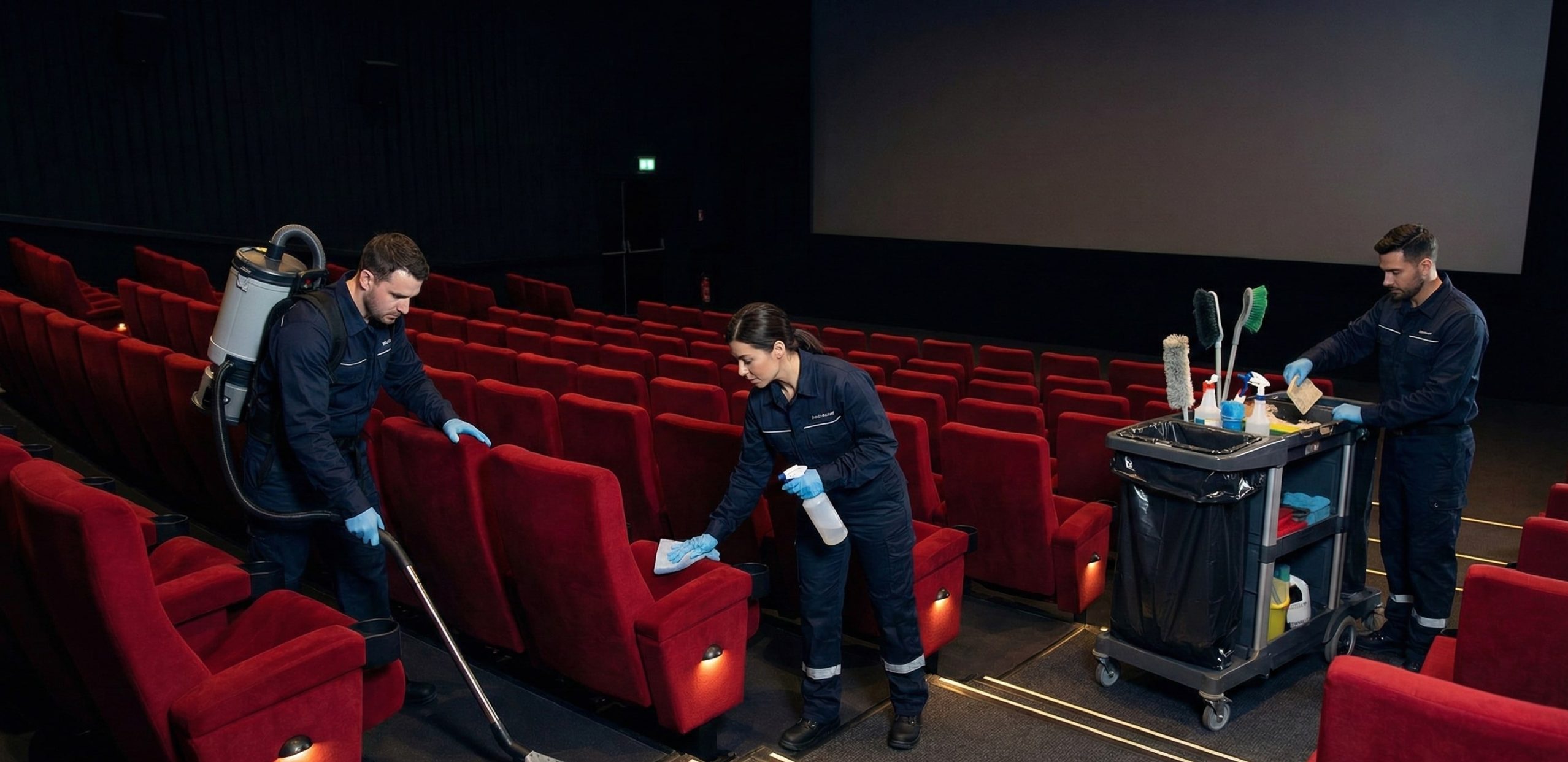
Movie theater cleaning keeps auditoriums, lobbies, and concession areas safe, fresh, and welcoming for guests. Create a daily, weekly, and monthly cleaning schedule, train staff on hygiene, sanitize high-touch surfaces, and deep clean carpets and seats. Consistent movie theater cleaning improves customer experience, protects your brand, and boosts overall loyalty.
Table of Contents
- Use Eco-Friendly Cleaning Solutions
- Manage Waste Effectively
- Services Offered by Ahlers Cleaning
- Frequently Asked Questions
1. Use Eco-Friendly Cleaning Solutions
Using eco-friendly cleaning solutions is a smart choice for movie theaters, benefiting both the environment and the overall experience for guests. Opt for biodegradable products that break down naturally, reducing the environmental impact. Plant-based solutions are ideal, as they are free from harsh chemicals and toxins, ensuring a safer atmosphere for both staff and patrons.
Incorporating reusable cleaning tools, like microfiber cloths, minimizes waste associated with single-use items. Concentrated cleaning solutions can also help cut down on packaging waste and lower transportation emissions, making your cleaning practices more sustainable.
It’s important to implement eco-friendly practices not just in the use of products but also in their storage and disposal, preventing any harmful leaks into the environment. Training staff on green cleaning techniques is crucial; they should understand how to use these eco-friendly products effectively.
Seek out certifications or labels for cleaning products that demonstrate adherence to environmental standards, ensuring your theater’s commitment to sustainability. Regularly evaluate the cleaning frequency to reduce product usage while still maintaining high cleanliness standards. Promoting these eco-friendly initiatives to your patrons can enhance your theater’s reputation as a responsible business. Finally, stay updated on the latest sustainable practices and products, regularly reviewing and updating your cleaning protocols.
| Eco-Friendly Practices | Description |
|---|---|
| Biodegradable Products | Choose biodegradable cleaning products that break down naturally and reduce environmental harm. |
| Plant-Based Solutions | Opt for plant-based solutions that are free from harsh chemicals and toxins, ensuring safety for guests and staff. |
| Reusable Tools | Incorporate reusable cleaning tools, such as microfiber cloths, to minimize waste from single-use items. |
| Concentrated Solutions | Utilize concentrated cleaning solutions to reduce packaging waste and lower transportation emissions. |
| Storage and Disposal Practices | Implement eco-friendly practices in storage and disposal of cleaning products to prevent chemical leaks. |
| Staff Training | Train staff on the importance of green cleaning and how to use eco-friendly products effectively. |
| Certifications | Seek certifications or labels for cleaning products that indicate they meet environmental standards. |
| Cleaning Frequency | Evaluate the cleaning frequency to reduce product usage while maintaining cleanliness. |
| Patron Engagement | Promote eco-friendly cleaning initiatives to patrons, enhancing the theater’s reputation as a responsible business. |
| Protocol Review | Regularly review and update cleaning protocols to incorporate the latest sustainable practices and products. |
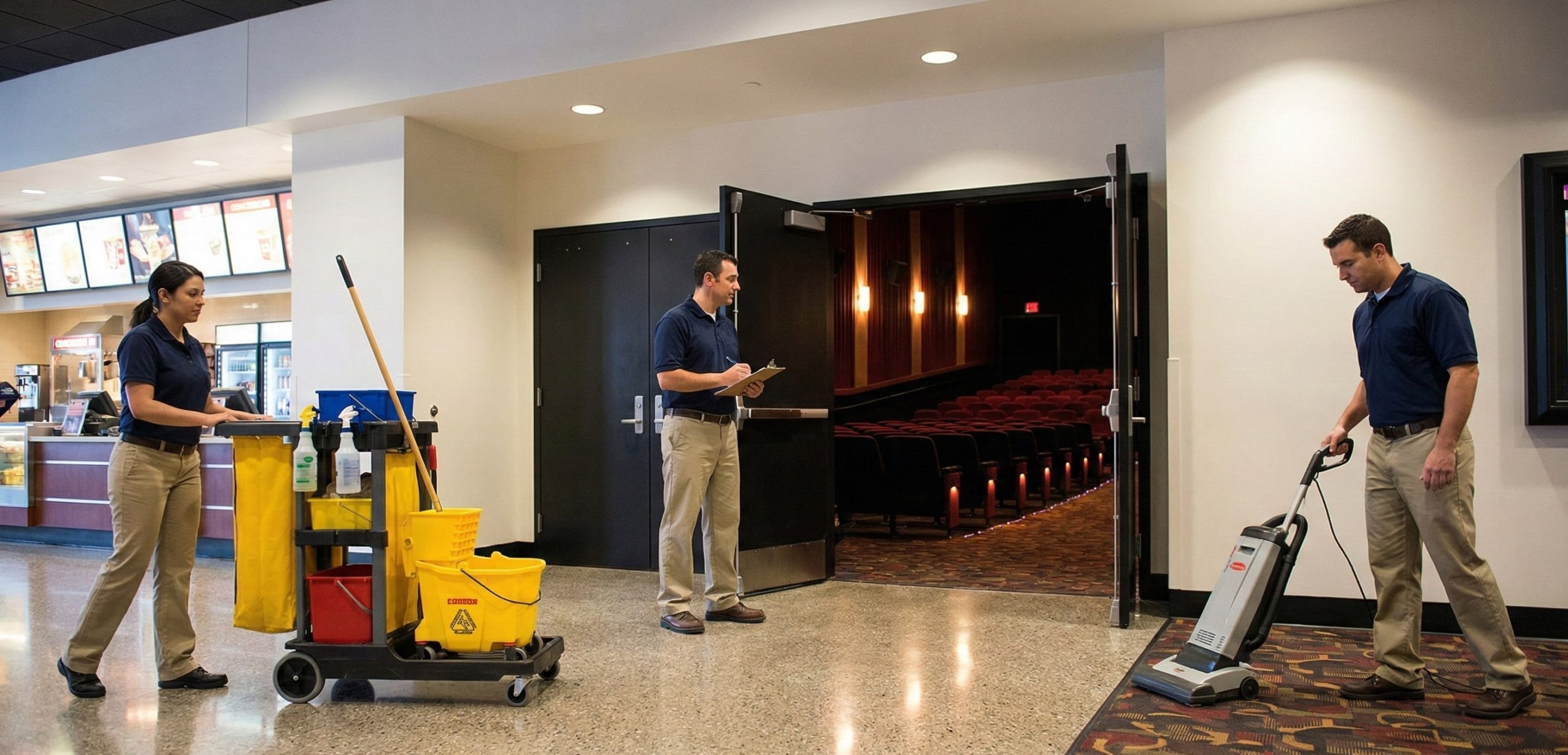
2. Manage Waste Effectively
Effective waste management is key to keeping movie theaters clean and environmentally friendly. Start by placing recycling bins next to trash bins, making it easy for patrons to sort their waste correctly. Clear labeling on each bin helps guide guests on what can be recycled, composted, or thrown away, reducing confusion and encouraging responsible behavior. Regular waste collection is essential to prevent overflow, maintaining a tidy look around the theater.
Training staff in proper waste management techniques is also important. They should be well-versed in sorting and disposal procedures to ensure that waste is handled correctly. Tracking waste disposal patterns can provide valuable insights, indicating where improvements can be made and how recycling efforts can be enhanced.
Partnering with local waste management agencies can further ensure that waste is disposed of responsibly and that recycling processes are effective. Use compostable materials for concession stand items to minimize landfill waste, and consider conducting periodic waste audits to assess and refine waste management practices.
Engaging patrons in waste reduction campaigns can be beneficial as well. Providing incentives for those who participate can motivate guests to be more mindful of their waste. Additionally, implementing digital ticketing not only streamlines the ticketing process but also significantly reduces paper waste, contributing to a cleaner environment.
- Place recycling bins alongside trash bins to encourage proper waste segregation among patrons.
- Clearly label bins to guide guests on what materials can be recycled, composted, or disposed of as trash.
- Schedule regular waste collection to prevent overflow and maintain a tidy appearance around the premises.
- Train staff in proper waste management techniques, including sorting and disposal procedures.
- Track waste disposal patterns to identify areas for improvement and enhance recycling efforts.
- Partner with local waste management agencies to ensure responsible disposal and recycling processes.
- Use compostable materials for concession stand items to reduce landfill waste.
- Conduct periodic waste audits to measure and improve waste management practices.
- Engage patrons in waste reduction campaigns, providing incentives for those who participate.
- Implement digital ticketing to decrease paper waste associated with physical tickets and receipts.
3. Services Offered by Ahlers Cleaning
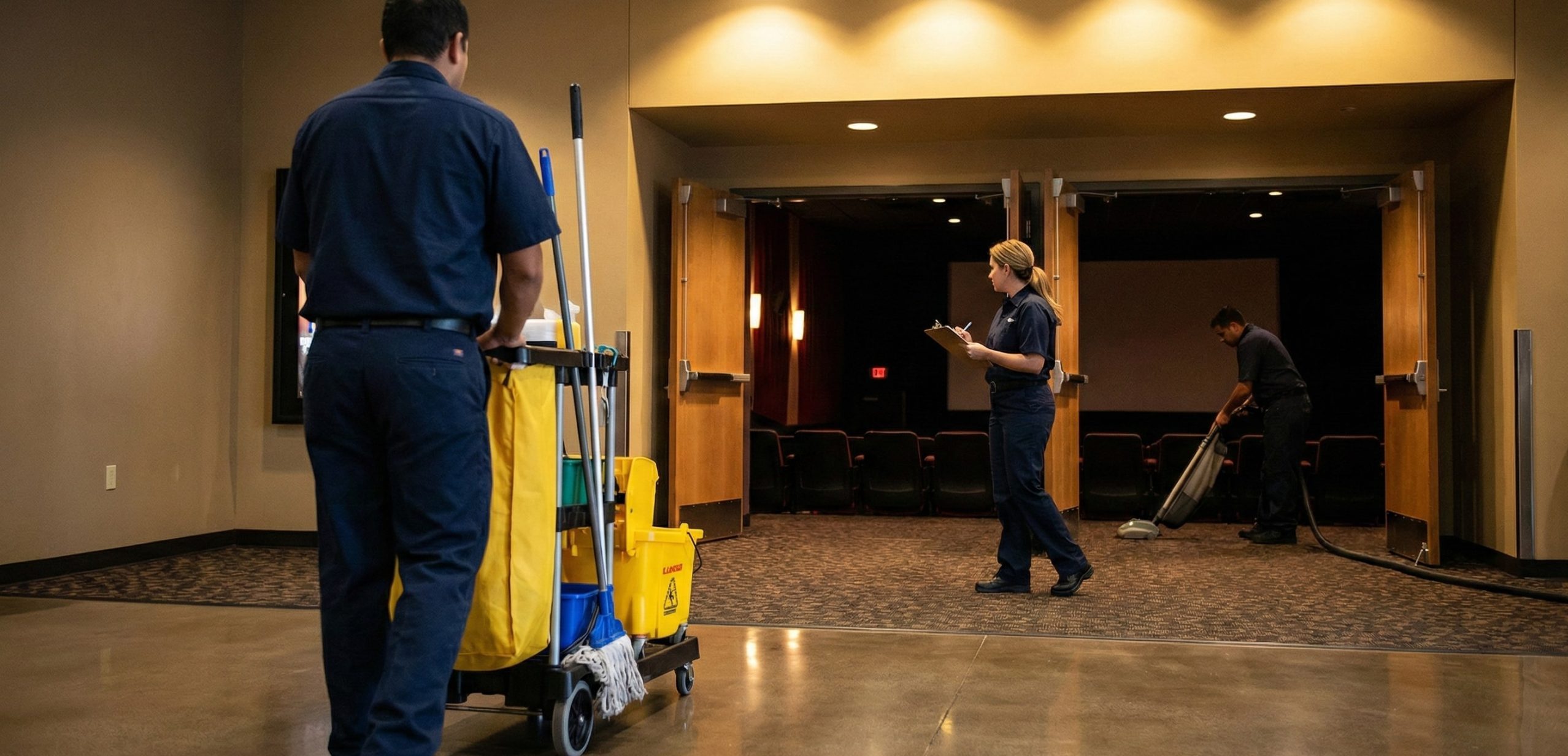
Ahlers Cleaning provides specialized cleaning services specifically designed for movie theaters, addressing their unique needs. They offer regular cleaning schedules, including daily, weekly, and monthly services, ensuring that high cleanliness standards are consistently maintained. Advanced cleaning equipment like HEPA-filter vacuums and steam cleaners are used to achieve effective sanitation. Deep cleaning options are available for carpets, upholstery, and specialized surfaces, guaranteeing thorough cleanliness throughout the theater. The staff is trained in the latest cleaning techniques and safety protocols tailored for theater environments. Ahlers Cleaning also offers flexible service hours to fit the theater’s operating schedule, minimizing disruption. Their commitment to eco-friendly cleaning practices aligns with sustainability goals, making them a responsible choice. They provide emergency cleaning services for spills or accidents during screenings, crucial for maintaining guest satisfaction. Regular inspections and quality assurance checks are performed to ensure cleaning standards are met consistently. Additionally, Ahlers Cleaning collaborates with theater management to create customized cleaning plans based on specific needs and feedback from patrons.
Frequently Asked Questions
What are the best cleaning products for movie theaters?
Choosing the right cleaning products is crucial. Look for disinfectants that are safe for various surfaces, like seats and floors. Also, consider eco-friendly options to minimize environmental impact.
How often should movie theaters be cleaned?
Cleaning schedules can vary, but it’s important to clean theaters after each showing. Regular deep cleaning should also be scheduled weekly to keep everything fresh and hygienic.
What areas should be prioritized when cleaning a theater?
Focus on high-touch areas like seats, handrails, and restrooms. Also, don’t forget the floors and surfaces where food and drinks are served, as they can harbor bacteria.
Are there specific techniques for cleaning different types of seating?
Yes, different materials require different care. For cloth seats, vacuuming and steam cleaning are effective, while leather seats can be wiped down with a gentle cleaner and a soft cloth.
How can theaters maintain cleanliness during busy showtimes?
Designate staff to quickly tidy up between shows, like picking up trash and wiping down surfaces. Having enough garbage bins and frequent monitoring can also help control messes.