Post-event cleaning is essential for any venue looking to stay safe, efficient, and appealing. By addressing hazards like spills and waste, venues can comply with health and safety standards. A clean environment also enhances rebooking opportunities, which boosts revenue significantly. The preservation of venue assets reduces long-term damage from stains or wear, while maintaining high cleanliness standards builds a strong reputation that attracts clients back. To ensure thoroughness, a working checklist should include pre-event inspections, during-event maintenance such as restroom monitoring, and post-event restoration tasks like deep cleaning all areas. Ultimately, this approach fosters client trust and satisfaction.
Table of Contents
- Essential Post-Event Cleaning Checklist
- Phases of Post-Event Cleaning
- Pre-Event Preparation Checklist
- During-Event Maintenance Tasks
- Post-Event Restoration Steps
- Detailed Cleaning Tasks
- Cleaning Public Areas Effectively
- Cleaning the Main Event Space
- Restroom Cleaning Guidelines
- Effective Waste Management Strategies
- Considerations for Different Event Types
- Communication and Accountability in Cleaning
- Quality Control Measures
- Client Engagement for Repeat Business
- Service Areas for Ahlers Building and Cleaning Services
- Contact Ahlers for Professional Cleaning Services
- Frequently Asked Questions
Essential Post-Event Cleaning Checklist
An effective post-event cleaning checklist is vital for ensuring a venue looks pristine and is ready for the next booking. First, health and safety compliance should be a priority. Address spills and waste promptly to reduce hazards for staff and clients. A clean venue also enhances turnaround efficiency, allowing for quicker rebooking, which maximizes revenue potential. Preserving venue assets is crucial, as regular cleaning prevents long-term damage from stains and wear, safeguarding your investment.
Professional standards are essential, as a clean venue not only attracts repeat business but also enhances your reputation in the industry. Training cleaning staff in best practices and safety protocols ensures that everyone on the team is equipped to uphold these standards. Inventory management is important too; keeping track of cleaning supplies and equipment helps avoid shortages during busy periods.
Communication with clients about the cleaning process and timelines fosters transparency and builds trust. Regular maintenance of cleaning equipment is necessary for optimal performance, and collecting feedback after events can provide valuable insights into cleaning satisfaction, allowing for continuous improvement. Lastly, adopting sustainability practices by using eco-friendly cleaning products minimizes environmental impact, making your venue more appealing to environmentally conscious clients.
| Task | Importance |
|---|---|
| Health and Safety Compliance | Ensures safety by addressing hazards like spills and waste. |
| Turnaround Efficiency | A clean venue allows for quicker rebooking, maximizing revenue. |
| Preservation of Venue Assets | Timely cleaning prevents long-term damage from stains and wear. |
| Professional Standards | High cleanliness standards enhance reputation and attract repeat business. |
| Staff Training | Ensure cleaning staff are trained in best practices and safety protocols. |
| Inventory Management | Keep track of cleaning supplies and equipment to avoid shortages. |
| Client Communication | Inform clients about the cleaning process and timelines for transparency. |
| Equipment Maintenance | Regularly check and maintain cleaning equipment for optimal performance. |
| Feedback Collection | After events, gather feedback on cleaning satisfaction to improve services. |
| Sustainability Practices | Use eco-friendly cleaning products to minimize environmental impact. |
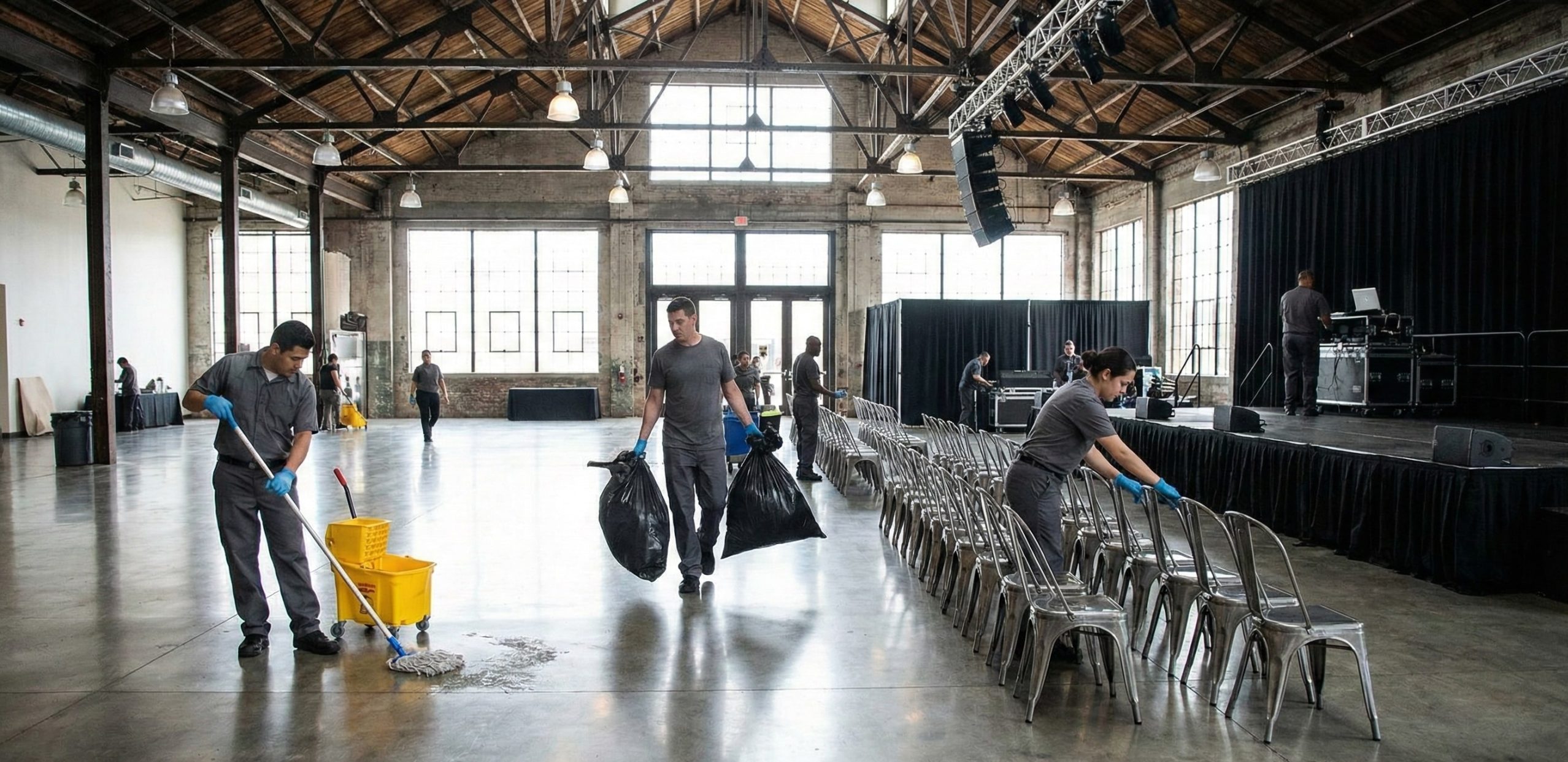
Phases of Post-Event Cleaning
The post-event cleaning process can be broken down into three key phases: pre-event preparation, during-event maintenance, and post-event restoration.
In the pre-event preparation phase, a thorough inspection of the venue is crucial. This includes checking that all areas are clean and ready for guests, paying special attention to flooring, where carpets should be vacuumed and hard surfaces mopped. Restrooms must be deep cleaned and fully stocked with supplies to ensure guest comfort. Additionally, high-touch surfaces such as door handles and light switches need to be sanitized, while dusting surfaces creates an inviting atmosphere.
During the event, maintenance is essential for keeping the venue clean. Staff should frequently monitor restrooms to restock supplies and ensure cleanliness. Waste management is also important, with regular emptying of trash bins to prevent overflow. Immediate attention to spills helps maintain safety, and high-touch points should be sanitized regularly to prevent the spread of germs.
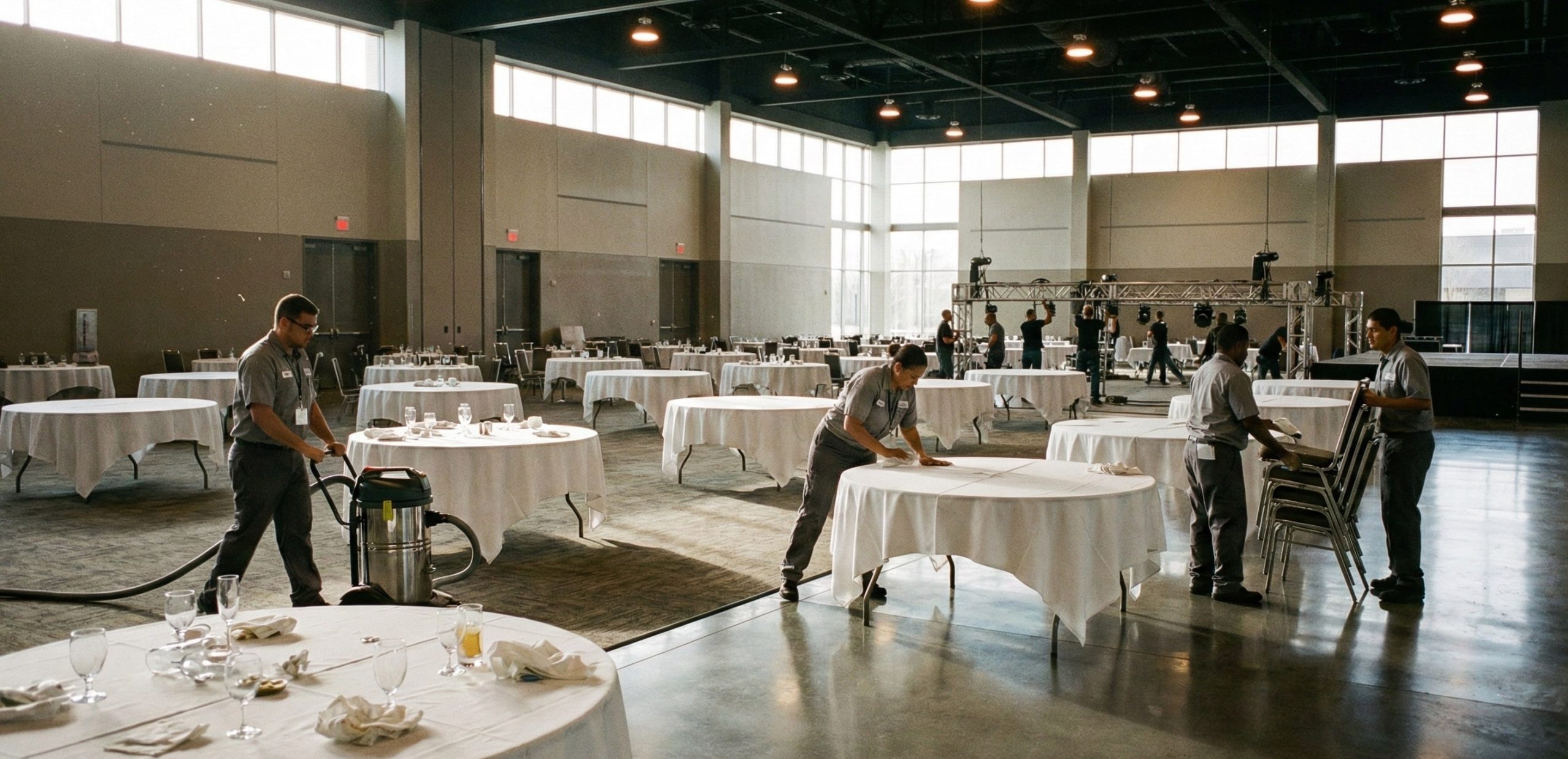
The post-event restoration phase begins immediately after the event ends. This includes a clear-out of all items used, such as decorations and rental equipment. A comprehensive cleaning follows, focusing on general areas and restrooms, which should undergo a deep clean. Finally, a thorough final inspection ensures that all areas meet cleanliness standards, addressing any damages that may have occurred.
Pre-Event Preparation Checklist
Before the event begins, it’s crucial to conduct a thorough venue inspection. This allows you to assess the overall condition, looking for areas that may need extra attention. Gather all necessary cleaning supplies and equipment ahead of time to avoid any last-minute scrambles. Assign specific roles to your cleaning staff to ensure that everyone knows their responsibilities, making the process more efficient. Ensure restrooms are fully stocked with essential items like toilet paper and soap. Clean and dust all surfaces to create a welcoming atmosphere. Place clear signage to guide guests to restrooms and exits effectively. Check that all lighting is functional and provides adequate illumination for the event. Don’t overlook safety; inspect fire exits, accessibility features, and emergency equipment. Make sure the flooring is prepared by vacuuming carpets and mopping hard floors. Finally, set up all event equipment, including AV systems, ensuring everything is in place and functioning properly before guests arrive.
During-Event Maintenance Tasks
During an event, maintaining a clean and safe environment is essential. Regular restroom monitoring is crucial; staff should check cleanliness and supplies frequently to ensure guests are comfortable. Waste management is another priority, with trash bins needing to be emptied often to prevent overflow, which can create a messy atmosphere. Immediate spill management is vital for safety; any spills should be addressed at once to avoid accidents. High-touch point sanitation must be scheduled throughout the event, focusing on areas like door handles and light switches to keep germs at bay. Staff should also monitor the flooring for debris and clean as necessary, ensuring a safe walking surface. Guest assistance is important, so having staff available to address concerns can enhance the overall experience. Regular supply checks for items like napkins and utensils will help keep everything stocked and guests satisfied. Being prepared for emergencies, such as unexpected spills or equipment issues, is also key. Clear communication among staff members will facilitate efficient operations during the event, while post-event notifications can guide guests on next steps when the event concludes.
Post-Event Restoration Steps
Post-event restoration begins with an initial clear-out. Immediately after the event concludes, all rental items, decorations, and personal belongings should be removed. This step prevents clutter and allows for a smooth transition to cleaning. Next, gather all trash and waste. Collecting rubbish promptly not only maintains a tidy space but also ensures that no hazardous materials linger.
Once the clear-out is complete, a thorough deep cleaning is essential. This includes cleaning all areas used during the event, such as floors and surfaces. Special attention should be given to restrooms, where fixtures need to be sanitized and restocked for future use. Kitchen and catering areas require similar care; all equipment and surfaces used for food service must be sanitized to maintain health standards. Floor care is also crucial; clean all flooring types and address any stains meticulously.
After the cleaning, conduct a final inspection. Walk through the venue to ensure everything is in order and meets cleanliness standards. If any damages occurred during the event, document them for follow-up. Providing clients with a summary of the cleaning process and any encountered issues fosters transparency. Lastly, hold a feedback session with staff to discuss improvements for future events. This collaborative review is vital for refining processes and maintaining high standards.
- Initial Clear-Out: Remove all rental items and decorations immediately after the event ends.
- Rubbish Collection: Gather all trash and waste materials for disposal promptly.
- Deep Cleaning: Conduct thorough cleaning of all areas used during the event, including floors and surfaces.
- Restroom Cleaning: Deep clean restrooms, ensuring all fixtures are sanitized and restocked.
- Kitchen/Catering Areas: Sanitize all areas and equipment used for food service during the event.
- Floor Care: Ensure all flooring is cleaned and any stains addressed in detail.
- Final Inspection: Conduct a thorough walk-through to ensure everything is clean and in order.
- Damage Reporting: Document any damages incurred during the event for follow-up.
- Client Review: Provide clients with a summary of the cleaning process and any issues encountered.
- Feedback Session: Discuss with staff any improvements needed for future events.
Detailed Cleaning Tasks
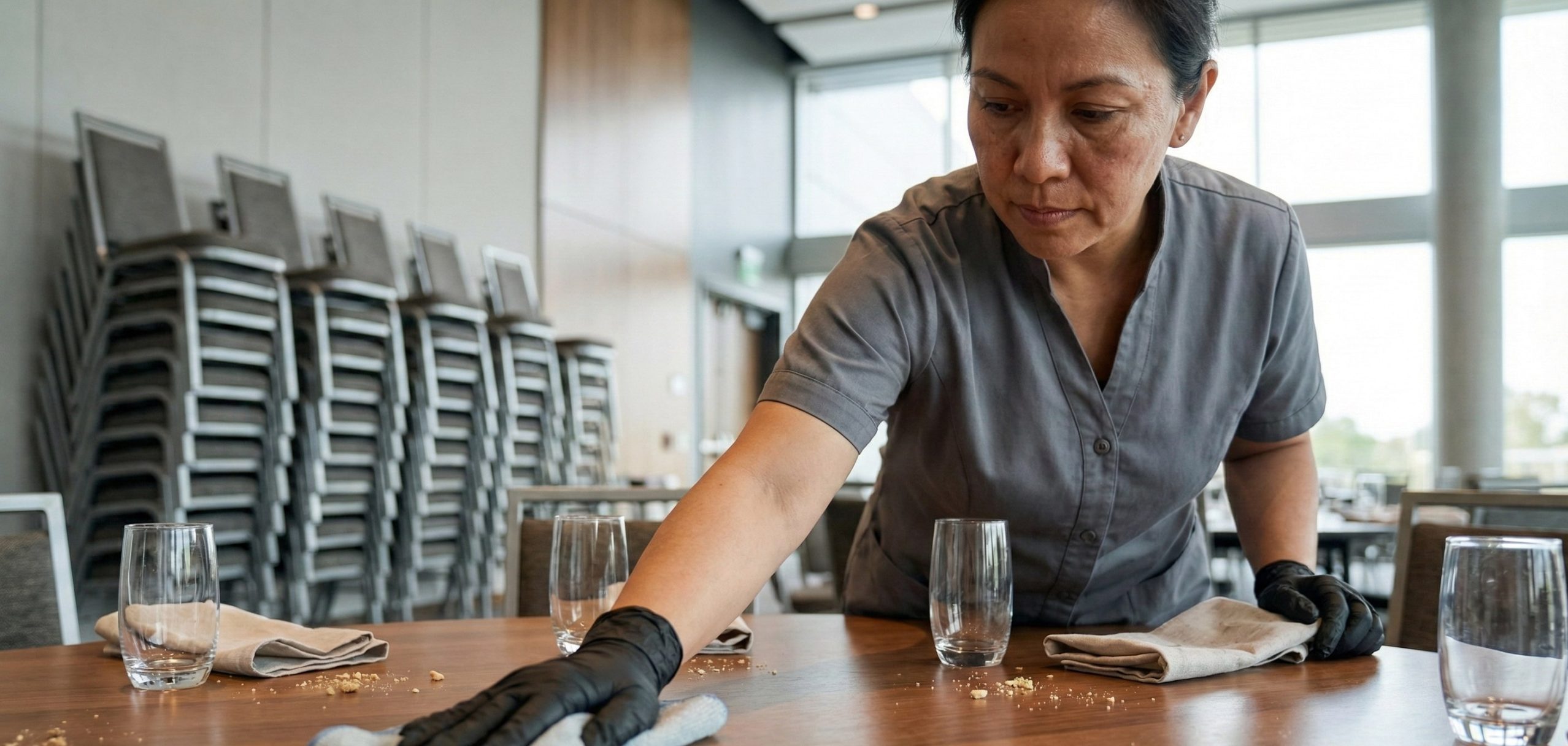
Public areas like the lobby and hallways require a thorough sweep, mop, or vacuum to eliminate dirt and debris that accumulate during events. It’s essential to wipe down and sanitize all surfaces, including furniture and fixtures, to ensure a welcoming environment. Cleaning glass doors and windows not only enhances visibility but also improves the overall presentation of the venue. Don’t forget to empty and reline trash bins, as this helps maintain cleanliness and control unpleasant odors.
In the main event space, confirming the event layout is vital. Clean behind furniture and equipment to ensure no dust or waste is hidden. Dusting all fixtures, including light fixtures and decorations, adds to the overall appearance. It’s also crucial to check HVAC systems to ensure they function properly, providing adequate ventilation. Verify that all electrical outlets and extension cords are in good working order, as this is vital for safety.
Restrooms require special attention. Stock all dispensers with toilet paper, soap, and paper towels, and conduct a deep clean of all surfaces, including toilets and sinks. Mopping floors with disinfectant ensures a hygienic environment.
For waste management, collect and sort all waste materials promptly. This includes safely disposing of hazardous materials to adhere to safety regulations. By following these detailed cleaning tasks, you can ensure a spotless venue ready for future events.
Cleaning Public Areas Effectively
To keep public areas like lobbies and hallways looking their best, regular maintenance is key. Start with the flooring: sweep, mop, or vacuum these high-traffic spots frequently to prevent dirt buildup. Pay special attention to surfaces that guests often touch, such as door handles and light switches; these should be sanitized regularly to promote hygiene. Don’t forget about signage, keeping directional and informational signs clean and legible helps guide guests smoothly through your venue.
Lighting also plays a crucial role in the ambiance, so ensure all fixtures are dust-free and functioning properly. Furniture care is equally important; regular dusting and cleaning keep it inviting for visitors. Additionally, maintaining air quality is essential, so schedule regular HVAC checks and replace filters as needed to ensure comfort.
Encouraging visitor feedback can also help identify cleanliness issues quickly, allowing you to address them promptly. Establishing a routine cleaning schedule for public areas is a must to maintain high standards. Tailor your cleaning approach based on the specific type of event to ensure all needs are met. Finally, have emergency protocols in place to deal with spills or accidents swiftly, keeping the space safe and welcoming.
Cleaning the Main Event Space
Cleaning the main event space is crucial for ensuring a seamless transition from one event to the next. Start by confirming the layout of the space, as this helps in understanding where dirt and debris might have accumulated, especially behind and beneath furniture. It is important to thoroughly clean these hidden areas to avoid any unpleasant surprises later. As you begin, dust all fixtures, including light fixtures and wall decorations, to give the space a polished look.
Electrical safety should not be overlooked; test all outlets and extension cords to ensure they are functioning properly and safely. Pay close attention to the floors, ensuring that carpets are vacuumed and hard surfaces are mopped to leave them spotless. After the cleaning is done, prepare the space for its next use by making sure everything is clean and in order.
Accessibility is vital as well; check that all areas are free of obstructions to guarantee safe passage for everyone. Follow strict sanitization procedures, especially for high-touch points like door handles and light switches, as this will help maintain a safe environment. Gathering feedback on the cleanliness of the space can provide insights for continuous improvement. Finally, conduct a comprehensive final review to ensure all tasks have been completed satisfactorily, leaving the venue ready for its next event.
Restroom Cleaning Guidelines
Restroom cleaning is crucial for maintaining hygiene and guest comfort. Start by ensuring all restroom supplies, like toilet paper and soap, are fully stocked before and after events. Deep clean all surfaces, including sinks, countertops, and mirrors, as they can quickly accumulate grime. Toilets should be thoroughly cleaned and checked for proper functioning; this includes flushing and checking for leaks. It’s also important to mop restroom floors with disinfectant to control odors and eliminate germs. Regularly empty and clean trash bins to maintain hygiene, as overflowing bins can create an unpleasant environment. Ensure hand sanitizer stations are available and stocked for guest use, encouraging good hygiene practices. Clear signage should be displayed to guide guests on proper restroom use and hygiene. After events, use air fresheners to keep restrooms smelling pleasant. Frequent monitoring during events is essential to ensure cleanliness and supply levels are adequate. Finally, conduct a thorough post-event cleaning, restocking supplies as needed to prepare for the next use.
Effective Waste Management Strategies
Effective waste management is crucial for maintaining a clean and environmentally friendly venue post-event. Start by educating staff and guests on how to sort waste properly, distinguishing between recyclables and general waste. This can significantly reduce the amount of trash that ends up in landfills. Implement regular collection schedules to prevent overflow during events, ensuring that bins are emptied frequently. Establish recycling programs to minimize your environmental impact, and always follow guidelines for hazardous waste disposal to keep everyone safe.
Clear signage is essential; use clear signs to guide guests on the available waste disposal options, making it easy for them to participate. Consider keeping track of the waste generated during events to identify areas where you can reduce waste in the future. Composting organic waste is another effective strategy to minimize landfill contributions and can enhance your sustainability efforts. Collaborate with local waste management services to ensure that proper disposal methods are used and that all waste is handled responsibly. After each event, conduct a post-event analysis to review the waste generated, allowing you to assess your efforts and find opportunities for improvement. Lastly, encourage community engagement by inviting guests to participate in sustainability efforts during the event, fostering a culture of responsibility and care for the environment.
Considerations for Different Event Types
Different types of events require tailored post-event cleaning approaches. For weddings, the focus should be on detail, ensuring all decorations, like confetti, are cleaned up and that outdoor areas are left safe and tidy. Corporate events often feature technology, so it’s crucial to clean AV equipment and ensure that conference rooms are spotless for future use. Public events generate a lot of waste, making effective waste management and recycling efforts essential to avoid overflow and keep the venue presentable. Social events typically involve food and beverages, so it’s important to check for spills and stains, ensuring all surfaces are cleaned thoroughly. Fundraising events require special attention to high-traffic areas where guests mingle, as these spots need to remain inviting and clean. Sporting events can leave behind significant debris, necessitating a thorough clean-up to maintain good community relations. Festivals may require more staffing and resources due to the larger crowds and increased waste. Cultural events often involve various materials requiring specialized cleaning methods to ensure preservation. Trade shows demand meticulous cleaning of booths and display areas for a professional appearance. Even virtual events, while not needing physical cleaning, require a clean space for video presentations to minimize distractions and maintain professionalism.
Communication and Accountability in Cleaning
Establishing clear roles for cleaning staff is crucial to ensure that all tasks are covered without overlap or confusion. Each team member should know their specific responsibilities, which helps streamline the cleaning process. Utilizing checklists can further enhance accountability among staff members, allowing everyone to track their cleaning duties effectively. Regular meetings are beneficial for clarifying expectations and addressing any issues that may arise during the cleaning process. Encouraging open communication fosters a supportive work environment, where team members feel comfortable discussing challenges and solutions.
Implementing a system for reporting problems or concerns during the cleaning can prevent small issues from escalating. Training sessions can also enhance the staff’s understanding of best practices in cleaning and safety protocols, ensuring that everyone is on the same page. Additionally, leveraging technology, like apps, can help streamline communication and task management among the cleaning crew, making it easier to stay coordinated.
Feedback from clients is invaluable in guiding improvements in cleaning protocols and staff performance. Recognizing and rewarding staff for exceptional performance not only boosts morale but also motivates them to maintain high standards. Creating a culture of accountability encourages each team member to take ownership of their responsibilities, ultimately leading to a more efficient and effective cleaning operation.
Quality Control Measures
To maintain a high standard of cleanliness after events, it is crucial to implement quality control measures that everyone on the cleaning team can follow. Start by setting specific cleaning standards that all staff must adhere to, ensuring consistency in service delivery. Regular inspections of cleaned areas help confirm that they meet established quality benchmarks. Feedback from clients should be actively sought and used to refine cleaning processes where necessary. A detailed checklist for each cleaning task can prevent any steps from being overlooked. Designate quality control supervisors to oversee operations and provide guidance where needed. Additionally, routine training sessions keep staff informed of the latest cleaning techniques and safety protocols. Encouraging peer reviews fosters accountability and teamwork among cleaning staff. Keeping records of inspections and client feedback allows tracking of performance over time, helping to identify areas for improvement. If any issues arise during quality checks, having a system for immediate rectification is essential. Finally, regularly assessing the effectiveness of cleaning products and methods ensures that optimal results are consistently achieved.
Client Engagement for Repeat Business
Following up with clients after a cleaning service is crucial for gathering feedback and understanding their satisfaction levels. This not only shows that you care about their experience but also helps in identifying areas for improvement. Offering loyalty programs or discounts for repeat customers can significantly encourage ongoing business, making them feel valued. Keeping clear and open lines of communication allows you to address any concerns promptly, reinforcing trust and reliability.
Personalizing interactions by remembering past services and preferences enhances the customer experience. For example, if a client frequently books post-event cleaning, acknowledging that in your communications can make them feel appreciated. Additionally, providing educational content about cleaning tips and maintenance keeps clients engaged and positions you as a knowledgeable partner in their venue management.
Utilizing social media to showcase successful cleaning projects and share client testimonials can build credibility and attract new business. Regular newsletters with updates, promotions, and helpful cleaning advice keep your brand top of mind. Encouraging referrals through incentives for clients who recommend your services can expand your customer base organically.
Hosting client appreciation events is another effective way to strengthen relationships and build a sense of community. Creating an easy process for clients to rebook services streamlines their experience and increases the likelihood of repeat business. Overall, maintaining a focus on client engagement is essential for nurturing long-term relationships and ensuring a steady stream of work.
Service Areas for Ahlers Building and Cleaning Services
Ahlers Building cleaning Services proudly serves a wide range of locations across Missouri and Kansas. In Missouri, our service areas include Parkville, Lee’s Summit, Gladstone, Kansas City, Independence, Liberty, and Raytown. For our Kansas clients, we cater to Mission, Olathe, Overland Park, Lawrence, and Shawnee. To ensure our clients are informed, we map out our service coverage areas clearly on our website and marketing materials.
We are always looking to expand our service areas based on client demand and market research. By highlighting specific services we offer in each location, we aim to attract local clientele who can benefit from our expertise. Additionally, we develop partnerships with local businesses for cross-promotion, which helps to enhance our visibility in these communities.
Contact Ahlers for Professional Cleaning Services
At Ahlers Building Maintenance we understand the importance of a clean venue after any event. Our team is ready to assist you with professional cleaning services tailored to your needs. You can easily reach us by phone at +1913-894-4440, or you can drop us an email at mollie@abmaintenance.com. For your convenience, we also have a user-friendly contact form available on our website where you can request a quote or more information. We pride ourselves on our prompt responses, ensuring that you receive the information you need as quickly as possible. Don’t hesitate to reach out; we encourage you to inquire about our services and any ongoing promotions that may be featured on our contact page. Your feedback is invaluable to us, so we invite you to share your experiences and reviews, helping us build trust with new clients. In case you reach out but do not book our services right away, our team will follow up to better understand your requirements and ensure we meet your expectations. Let Ahlers take care of your post-event cleaning needs with professionalism and reliability.
Frequently Asked Questions
What are the first things to do after an event to clean a venue?
Start by picking up any trash or leftover food, then wipe down tables and chairs to remove spills or stains.
How do I handle cleaning different types of surfaces like carpets and floors?
Vacuum carpets first, then mop hard floors with a suitable cleaner, paying attention to any specific instructions for the floor type.
What items should be included in the cleaning supplies for post-event cleaning?
You should have trash bags, cleaning cloths, a vacuum, a mop, floor cleaner, and a surface cleaner ready for use.
How can I make sure all areas of the venue are cleaned properly?
Create a checklist or map of the venue, marking off each area as you clean it to ensure no spots are missed.
What should be done if there are any stains or damages after the event?
Treat stains immediately with appropriate products, and for damages, document them and report to the venue management to discuss further actions.