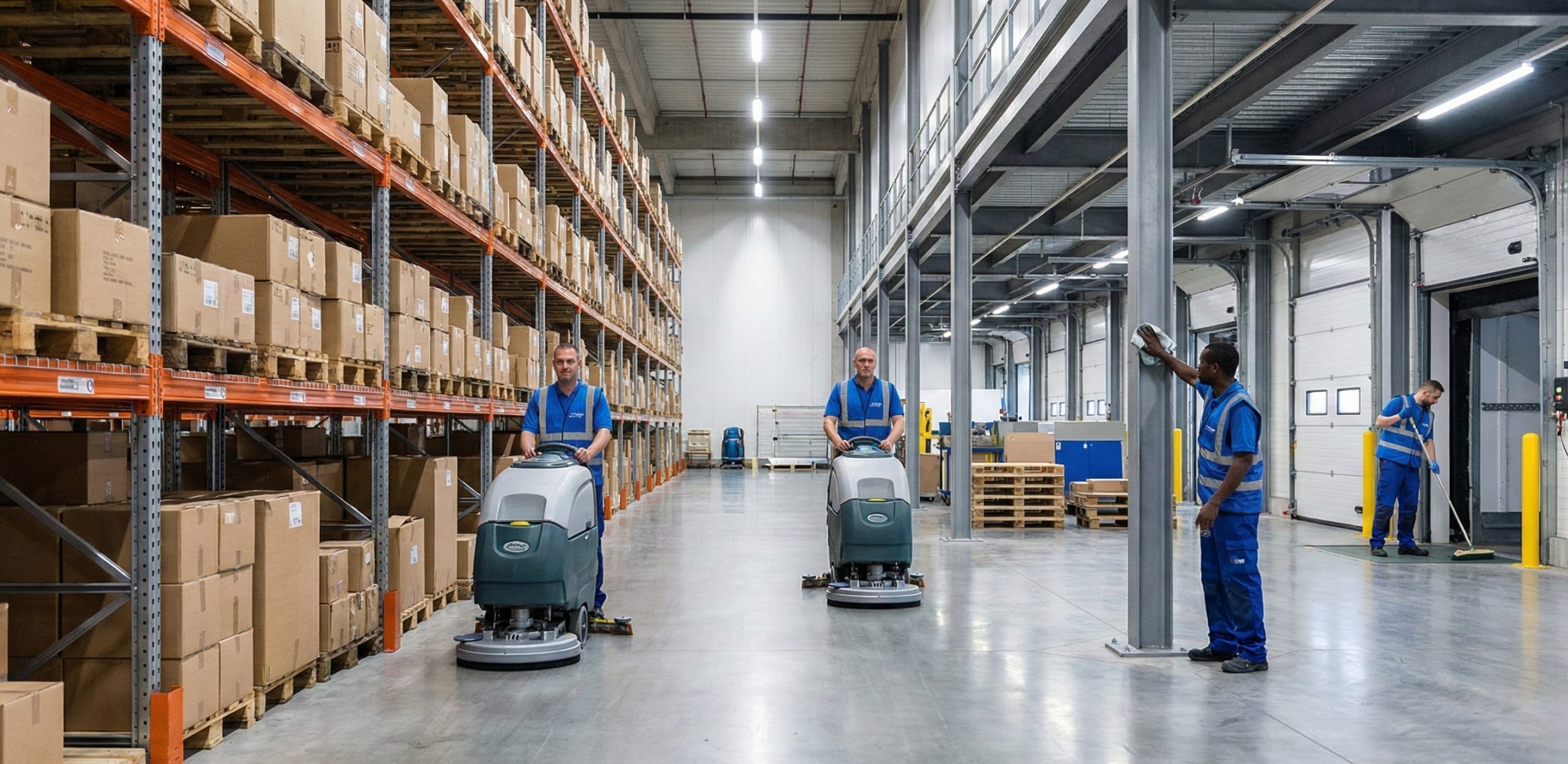
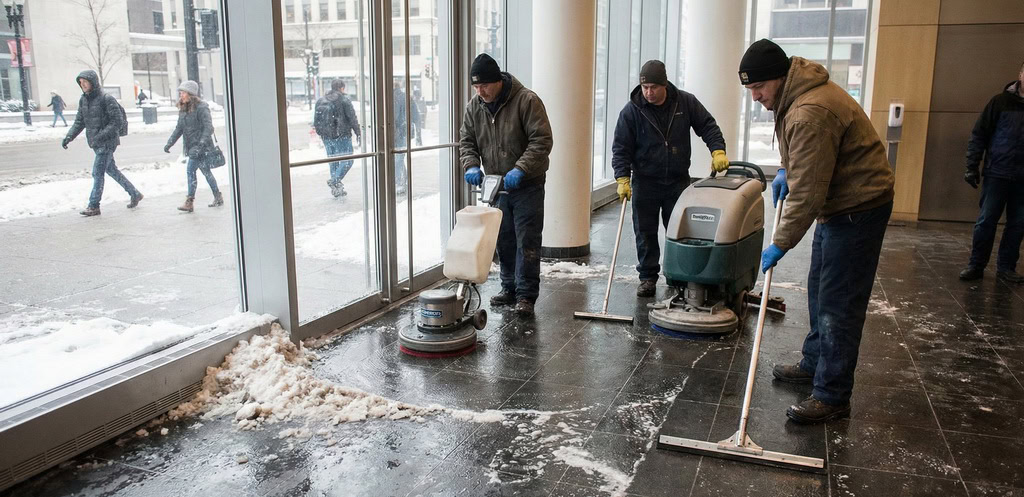
Kansas City winters leave their mark on commercial floors. Every boot that enters your building tracks snow, salt, and ice melt chemicals across your tile, VCT, or concrete surfaces. By February, months of winter traffic have created white film, dull patches, and visible damage throughout your facility.
This guide explains how winter weather damages commercial floors and what restoration options exist. You will learn when DIY cleaning works and when you need professional commercial floor cleaning in Kansas City to restore your building’s appearance.
How Winter Weather Damages Kansas City Commercial Floors
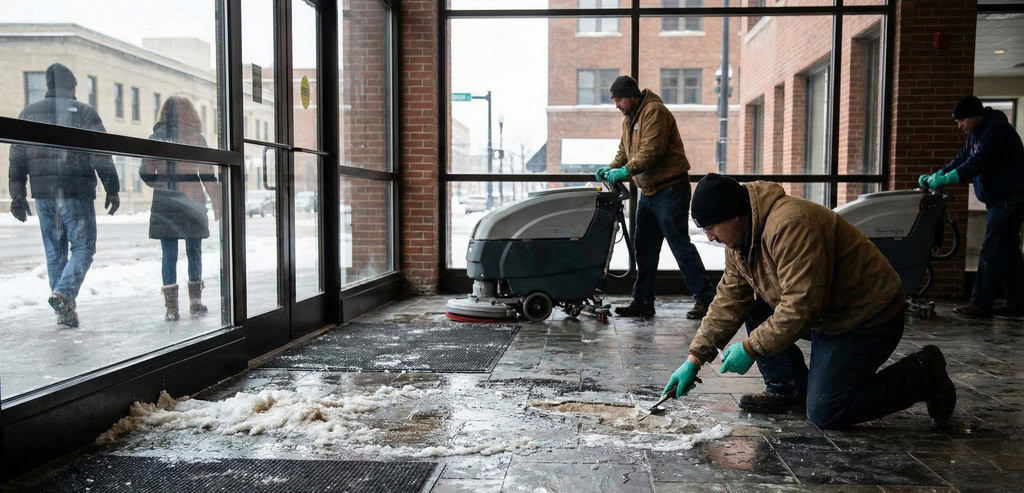
Kansas City averages 18 inches of snow per winter season. Property managers respond with rock salt and chemical ice melt products on sidewalks and parking lots. These substances protect people from slips outside but create problems inside your building.
Floor damage accumulates gradually from November through February. What starts as minor residue becomes permanent staining without proper intervention.
Salt, Ice Melt, and Chemical Residue Effects
Rock salt (sodium chloride) and chemical ice melt products damage commercial floors through several processes:
- Salt crystals scratch floor surfaces: As foot traffic grinds salt particles into flooring, tiny scratches form in the finish and the floor material itself
- Chemical residue etches surfaces: Calcium chloride and magnesium chloride ice melt products leave alkaline deposits that eat through wax finishes
- White film forms on tile and VCT: Dried salt residue creates a hazy white coating that regular mopping cannot remove
- Grout absorbs salt and discolors: Porous grout lines trap salt crystals that draw moisture and cause permanent staining
- Wax finish breaks down: Salt and chemicals strip protective floor wax, leaving surfaces exposed to further damage
The longer salt residue stays on floors, the deeper it penetrates. Quick daily cleanup reduces damage, but Kansas City businesses often cannot keep pace with constant winter foot traffic.
Moisture Damage and Slip Hazards
Winter brings moisture problems beyond chemical damage. Melting snow creates standing water in lobbies and entryways. This moisture causes additional floor issues:
- Water seeps under VCT tiles: Moisture penetrates seams and causes tiles to lift, curl, or separate from the subfloor
- Wet floors create slip hazards: The combination of water and salt residue makes surfaces dangerously slick
- Mold grows under floor coverings: Trapped moisture promotes mold growth that requires professional removal
- Concrete absorbs water and stains: Untreated concrete floors absorb moisture that carries salt deep into the material
- Wood floors warp and buckle: Excess moisture causes wood flooring to expand, warp, and separate at seams
Kansas City building codes require property owners to maintain safe walking surfaces. Winter floor damage increases liability for slip-and-fall accidents.
Signs Your Commercial Floors Need Professional Restoration
Some floor damage responds to regular cleaning. Other damage requires professional commercial floor cleaning in Kansas City. Knowing the difference saves money and prevents permanent surface destruction.
White Film and Salt Staining on Tile or VCT
White film is the most visible sign of winter floor damage. This hazy coating appears when salt residue dries on floor surfaces. Look for these warning signs:
- Hazy appearance that does not respond to mopping: Regular cleaning spreads salt residue but cannot remove it
- White lines along traffic patterns: Concentrated foot traffic creates visible salt trails through your building
- Cloudy grout lines: Salt absorbed into grout leaves permanent white discoloration
- Sticky residue on tile surfaces: Chemical ice melt products leave a tacky film that attracts dirt
- Dull spots in high-traffic areas: Salt abrasion removes floor shine in entry areas and hallways
Light salt film may respond to proper cleaning products. Heavy buildup or film that has penetrated the floor finish requires professional stripping and restoration.
Dull, Scratched, or Worn Wax Finish
Floor wax protects VCT, tile, and some hard surfaces from wear and chemical damage. Winter conditions break down this protective layer faster than normal. Signs of wax failure include:
- Loss of shine in traffic areas: Wax wears thin where people walk most frequently
- Visible scratches and scuff marks: Without adequate wax protection, floor materials scratch easily
- Uneven appearance: Some areas retain shine while others appear dull and flat
- Dark marks that will not buff out: Ground-in dirt penetrates through worn wax into the floor surface
- Peeling or flaking wax: Old wax separates from the floor in sheets or flakes
Worn wax cannot protect floors from continued winter damage. Professional stripping removes old wax completely so new protective coatings can bond properly.
How to Remove Salt Stains from Commercial Floors
Salt stain removal depends on the severity of buildup and the type of floor surface. Light residue responds to proper cleaning techniques. Heavy staining requires professional restoration.
DIY Cleaning Methods (Vinegar, Neutral Cleaners)
Fresh salt residue on hard floors can often be removed with proper cleaning products and techniques. Try these methods for light salt staining:
Vinegar solution for tile and VCT:
1. Mix one cup white vinegar with one gallon warm water
2. Apply solution to affected areas with a mop
3. Let solution sit for 3-5 minutes to dissolve salt deposits
4. Scrub with a soft brush on stubborn spots
5. Rinse thoroughly with clean water
6. Dry completely with clean towels or a wet vacuum
Neutral pH cleaner for all floor types:
- Purchase a neutral pH floor cleaner from a janitorial supply store
- Follow manufacturer dilution instructions exactly
- Apply, scrub, and rinse using the same process as the vinegar solution
- Neutral cleaners work on more floor types and will not damage wax finishes
Important warnings for DIY salt removal:
- Never use acidic cleaners on natural stone floors. Acid etches marble, granite, and limestone.
- Avoid excessive water on VCT seams. Water penetration causes tile lifting.
- Do not use abrasive scrub pads on waxed floors. Abrasives scratch through protective coatings.
- Test cleaning solutions in hidden areas first. Some products discolor certain floor materials.
When to Call Professional Floor Cleaning Services
DIY methods have limits. Call professional commercial floor cleaning services in Kansas City when you encounter these situations:
- Salt stains remain after proper DIY cleaning: Residue that has penetrated the floor finish requires professional equipment to remove
- White film covers large areas: Extensive damage needs industrial cleaning machines for efficient treatment
- Wax finish shows visible wear: Partial wax damage requires complete stripping and reapplication
- Floor surface shows scratching or etching: Physical damage to floor materials needs professional assessment
- Grout remains discolored after cleaning: Deep grout staining may require specialized cleaning or regrouting
- Tiles have lifted or separated: Water damage under tiles requires professional repair
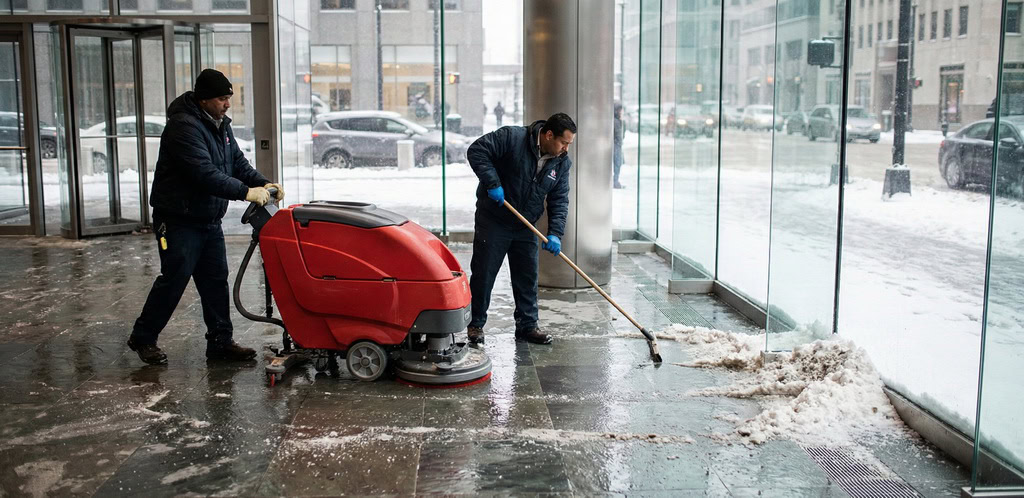
Professional floor cleaning companies use auto-scrubbers, commercial extractors, and specialized chemicals that remove damage DIY methods cannot address. Ahlers Building Maintenance assesses floor conditions and recommends the most cost-effective restoration approach.
Strip and Wax vs. Buffing: Which Does Your Floor Need?
Kansas City facility managers often ask about the difference between buffing and strip-and-wax services. These are different processes that address different levels of floor damage.
Buffing (also called burnishing):
- Uses a high-speed floor machine with a polishing pad
- Restores shine to existing wax finish
- Works only when wax layer remains intact
- Removes light scuffs and surface marks
- Takes 1-2 hours for most commercial spaces
- Costs less than strip-and-wax services
Strip and Wax:
- Removes all existing wax down to bare floor
- Eliminates embedded dirt, stains, and chemical residue
- Applies fresh wax coats for complete protection
- Required when wax is worn, damaged, or contaminated
- Takes 4-8 hours depending on floor size
- Provides longest-lasting restoration results
After Kansas City winters, most commercial floors need strip-and-wax service. Buffing cannot remove salt that has penetrated through the wax layer. Applying new wax over contaminated floors traps salt residue and causes continued damage.
Complete Floor Restoration Process Explained
Professional strip-and-wax restoration follows a specific sequence. Understanding this process helps you plan for service scheduling and facility access.
Step 1: Floor Preparation
- Remove all furniture and equipment from the work area
- Sweep and dust mop to remove loose debris
- Apply floor stripper solution according to manufacturer specifications
Step 2: Stripping
- Allow stripper to dwell for 10-15 minutes
- Agitate with low-speed floor machine and stripping pad
- Extract dissolved wax and residue with wet vacuum
- Repeat on heavily soiled areas if necessary
Step 3: Rinsing
- Mop floor with clean neutralizing solution
- Remove all stripper residue that could prevent wax adhesion
- Allow floor to dry completely (usually 30-60 minutes)
Step 4: Wax Application
- Apply first coat of floor finish with clean mop or applicator
- Allow 30-45 minutes drying time between coats
- Apply 3-5 coats depending on traffic level and floor type
- Final coat requires 2-4 hours before light foot traffic
Step 5: Curing
- Full wax cure takes 24-72 hours
- Avoid wet mopping during cure time
- Place walk-off mats at entrances to protect new finish
Most Kansas City commercial floor restoration happens after business hours. Ahlers Building Maintenance schedules evening and weekend service to minimize disruption.
Preventing Future Winter Floor Damage
Floor restoration addresses existing damage. Prevention programs reduce future restoration costs and keep floors looking professional throughout winter.
Entry Mat Systems and Walk-Off Programs
Entry mats capture salt and moisture before they reach interior floors. Effective mat systems include multiple zones:
Zone 1 – Exterior scraper mats:
- Place directly outside entrance doors
- Aggressive surface removes snow, ice, and large debris from footwear
- Rubber or heavy-duty carpet construction withstands weather
Zone 2 – Interior wiper mats:
- Position immediately inside entrance doors
- Absorbs moisture and captures fine particles
- Should extend 12-15 feet into the building for full effectiveness
Zone 3 – Secondary interior mats:
- Place at transition points like elevator lobbies
- Captures residue that passes first mat zones
- Protects interior floors from tracked contamination
Mat maintenance matters as much as mat placement. Dirty, saturated mats stop working and spread contamination. Rental mat services provide regular cleaning and replacement throughout winter months.
Regular Maintenance Schedules
Consistent floor maintenance prevents salt damage accumulation. Create a winter floor care schedule that includes:
Daily tasks:
- Dust mop all hard surface floors to remove salt crystals
- Wet mop entry areas and high-traffic zones with neutral cleaner
- Empty and clean entry mat systems
- Spot clean visible salt residue immediately
Weekly tasks:
- Auto-scrub hard surface floors in traffic areas
- Deep clean entry mats or schedule rental service pickup
- Inspect floor finish for wear patterns
- Treat visible salt stains with appropriate cleaning solution
Monthly tasks:
- Buff or burnish high-traffic areas to restore shine
- Apply spray buff solution to extend wax life
- Assess overall floor condition and plan restoration if needed
- Clean and inspect floor drains near entrances
Day porter services provide real-time floor maintenance during business hours. Porters address spills, tracked moisture, and salt immediately rather than waiting for evening cleaning crews.
→ Learn about our porter services for ongoing floor maintenance
FAQs About Commercial Floor Restoration
How much does commercial floor cleaning cost in Kansas City?
Costs depend on floor type, condition, and square footage. Basic strip-and-wax service for VCT floors typically ranges from $0.25 to $0.50 per square foot. Severely damaged floors or specialty materials cost more. Ahlers Building Maintenance provides free assessments and detailed quotes.
How long does strip-and-wax service take?
Most commercial floor restoration takes 4-8 hours depending on floor size and condition. This includes stripping, rinsing, and applying multiple wax coats. Full cure time requires an additional 24-72 hours before regular cleaning resumes.
Can salt stains be permanently removed from commercial floors?
Salt stains on the floor finish can be removed through stripping. Salt that has penetrated into VCT, tile, or grout may cause permanent discoloration. Early treatment prevents deep penetration. Professional assessment determines if staining is reversible.
How often should commercial floors be stripped and waxed?
High-traffic commercial floors typically need strip-and-wax service 2-4 times per year. Kansas City buildings often schedule restoration in late February after peak winter damage and again in early fall before winter season begins.
What type of floor wax works best for Kansas City winters?
High-solids floor finishes with 20-25% solids content provide the best protection against salt and chemical damage. These products build durable coatings that resist abrasion and chemical attack. Professional floor cleaning companies select appropriate products for each floor type.
Should I strip floors myself to save money?
DIY stripping often causes more damage than it fixes. Improper chemical dilution, inadequate rinsing, or wrong product selection can ruin floors permanently. Professional services cost less than floor replacement. Free assessments help you make informed decisions.
Restore Your Kansas City Commercial Floors This February
Winter has taken its toll on Kansas City commercial floors. Salt stains, worn wax, and chemical damage make buildings look neglected. This damage also creates safety hazards and accelerates long-term floor deterioration.
Professional commercial floor cleaning in Kansas City removes winter damage and restores floor appearance. Strip-and-wax service eliminates embedded salt, applies fresh protective coatings, and prepares floors for spring.
Ahlers Building Maintenance serves businesses throughout the Kansas City metro area. Our floor care teams use professional equipment and proven techniques to restore commercial floors to like-new condition.
Related Resources: